How to Become a Freight Dispatcher in 2026: Complete Step-by-Step Guide
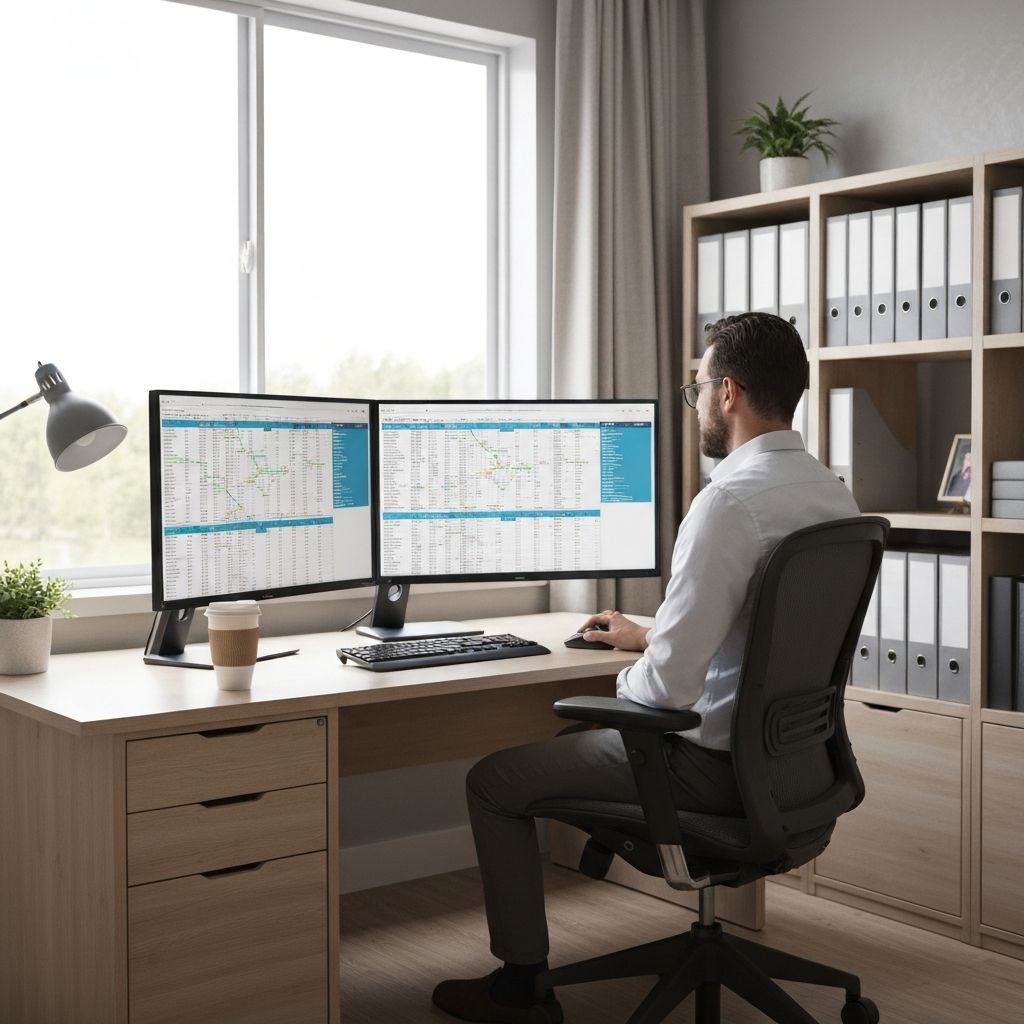
The freight dispatching industry is booming in 2026. With over 3.5 million truck drivers in the U.S. and an ongoing driver shortage exceeding 80,000, there has never been a better time to start a freight dispatching career. This comprehensive guide will show you exactly how to become a freight dispatcher, even if you have zero experience in the trucking industry.
1. What is a Freight Dispatcher?
A freight dispatcher is an independent professional who finds and books loads for truck drivers and owner-operators, negotiates rates with brokers, and handles the paperwork. Dispatchers work for carriers (not shippers), need no federal license, and can run the business from home for a typical startup cost of $200-$500.
A freight dispatcher (also called a truck dispatcher or independent dispatcher) is a professional who helps truck drivers and owner-operators find and book freight loads. Unlike working for a trucking company as an employee, independent dispatchers run their own business and work with multiple carriers.
As a dispatcher, your primary responsibilities include:
- Searching load boards (DAT, Truckstop, 123Loadboard) for available freight
- Negotiating rates with freight brokers on behalf of your carriers
- Planning efficient routes to minimize deadhead miles
- Handling paperwork including rate confirmations and BOLs
- Communicating with drivers about pickup and delivery schedules
- Tracking loads and troubleshooting issues in transit
The beauty of freight dispatching is that you can do it from anywhere with a computer, phone, and internet connection. Many dispatchers work from home, enjoying the flexibility of setting their own hours while building a lucrative income stream.
2. 2026 Freight Market Outlook
Yes. 2026 is one of the strongest entry points in years. After the 2022-2023 freight recession, carrier exits have tightened truck capacity, spot rates are rising off their lows, and an 80,000+ driver shortage keeps demand for efficient dispatching high. Dispatchers who build carrier relationships now are well positioned for the rest of the cycle.
Timing matters in trucking, and 2026 is shaping up to be one of the most favorable years to enter dispatching in over a decade. After the brutal freight recession of 2022-2023 - when spot rates collapsed from roughly $3.50/mile to near $2.00/mile and tens of thousands of carriers went under - the market has flipped. Here is what new dispatchers need to understand about the current cycle:
Tightening
Capacity
Years of carrier exits and stricter enforcement have pulled trucks off the road, giving the trucks that remain more pricing power.
Rising
Spot Rates
Spot rates have been climbing off recession lows, which means more revenue per load and bigger dispatcher commissions.
80,000+
Driver Shortage
The ongoing driver shortage keeps demand for efficient dispatching high, especially for small fleets and owner-operators.
Shrinking
Quote Windows
In a rising market, good rates disappear in minutes. Fast, decisive dispatchers win the best loads.
What this means for you: In an up-cycle, the dispatcher holds more leverage in negotiations because brokers need trucks more than carriers need any single load. But the same conditions reward speed and discipline - re-checking lane rates daily, separating fuel surcharge from linehaul, and locking in dedicated lanes with reliable brokers before the cycle turns again.
Reality check: Freight is cyclical. The market will eventually soften again. The dispatchers who survive downturns are the ones who built strong carrier relationships and banked profits during the good years. Treat 2026 as the time to establish yourself, not to assume the boom lasts forever.
3. Dispatcher vs. Freight Broker: Key Differences
One of the most common questions we get is about the difference between a dispatcher and a freight broker. Understanding this distinction is crucial because it affects your startup costs, legal requirements, and business model.
| Factor | Freight Dispatcher | Freight Broker |
|---|---|---|
| Works For | Carriers (truck drivers) | Shippers (companies with freight) |
| Federal License Required | No | Yes (MC Authority) |
| Surety Bond | Not required | $75,000 required |
| Startup Cost | $200-$500 | $10,000-$15,000+ |
| Liability | Low (agent of carrier) | High (responsible for freight) |
| Income Model | % of load or flat fee per truck | Margin between shipper/carrier rate |
Key Takeaway: Freight dispatching has a much lower barrier to entry than freight brokering. You can start dispatching with under $500 and no federal licensing, while brokers need $10,000+ and must navigate complex FMCSA regulations.
4. Requirements to Become a Freight Dispatcher
Freight dispatchers need no federal license, no MC Authority, and no surety bond. You only need a basic state business registration (typically $50-$150), a computer with reliable internet, a phone, and a load board subscription. Unlike freight brokers, there is no FMCSA licensing requirement to start dispatching.
The good news is that becoming a freight dispatcher has minimal formal requirements. Here is what you actually need:
Legal Requirements
- Business registration (LLC recommended for liability protection) - $50-$500 depending on state
- EIN (Employer Identification Number) from IRS - Free
- Business bank account - Free to low cost
- State business license if required in your state - $0-$100
What You Do NOT Need
- ✕CDL (Commercial Driver's License) - not required
- ✕MC Authority or DOT Number - not required for dispatchers
- ✕$75,000 surety bond - only required for brokers
- ✕College degree - no formal education required
- ✕Prior trucking experience - helpful but not necessary
Skills That Help You Succeed
- Communication skills - you will be negotiating daily with brokers and talking to drivers
- Basic math - calculating rates per mile, percentages, and deadhead costs
- Organization - managing multiple drivers and loads simultaneously
- Problem-solving - handling issues like detention, breakdowns, and load cancellations
- Persistence - building a client base takes consistent outreach effort
5. Startup Costs Breakdown
One of the biggest advantages of freight dispatching is the low startup cost. Here is a realistic breakdown of what you will spend to get started:
One-Time Costs
Monthly Costs
Bottom Line: You can realistically start a freight dispatching business for under $500 in one-time costs and $100-$200 per month in operating expenses. Compare that to the $10,000+ needed to start a freight brokerage.
6. Income Potential: How Much Can You Earn?
Entry-level freight dispatchers managing 1-3 trucks typically earn $2,500-$4,500 per month. With 5-10 trucks, earnings reach $5,000-$12,000 per month, and experienced dispatchers managing 15+ trucks can earn $15,000-$25,000+ monthly. Most dispatchers charge 5-10% of each load or a flat weekly fee per truck.
Freight dispatcher income varies significantly based on experience, number of trucks managed, and your pricing model. Here is what the data shows for 2026:
Entry Level
1-3 trucks
$2,500-$4,500/mo
Intermediate
5-10 trucks
$5,000-$12,000/mo
Advanced
15+ trucks
$15,000-$25,000+/mo
Common Pricing Models
Dispatchers typically charge using one of two models:
- Percentage Model (5-10% of gross load revenue)
Best for drivers running high-value loads. If a driver grosses $15,000/week, you earn $750-$1,500.
- Flat Fee Model ($50-$150 per truck per week)
Predictable income regardless of load volume. 10 trucks at $100/week = $4,000/month guaranteed.
Source: BLS Occupational Employment Statistics 2026, Indeed Salary Data, and Dispatcher Pro Academy student surveys (n=847).
7. Step-by-Step Roadmap (4 Weeks)
Here is a proven 4-week roadmap to go from complete beginner to earning freight dispatcher:
Learn the Fundamentals
- Complete a dispatcher training course
- Learn freight industry terminology (BOL, POD, deadhead, etc.)
- Understand the difference between dispatchers, brokers, and carriers
- Set up your home office workspace
Set Up Your Business
- Register your LLC with your state
- Get an EIN from the IRS (free, takes 5 minutes online)
- Open a business bank account
- Create your dispatcher agreement contract
- Set up load board accounts (start with 123Loadboard at $35/mo)
Find Your First Clients
- Join Facebook groups for owner-operators
- Practice your pitch using proven scripts
- Reach out to 10-20 carriers per day
- Offer trial dispatches to build trust
- Sign your first 1-3 carriers
Scale Your Operations
- Master DAT and load board optimization
- Develop relationships with reliable brokers
- Implement systems for managing multiple drivers
- Ask for referrals from satisfied carriers
- Work toward 5-10+ trucks
8. How to Find Your First Carrier Clients
Landing your first carriers is the single hardest part of starting a dispatching business - and the step where most beginners stall. The good news: you do not need a marketing budget. You need consistency and a system. Here are the channels that actually produce signed carriers in 2026:
Owner-Operator Facebook Groups
Groups like 'Owner Operators' and 'Hot Shot Trucking' have hundreds of thousands of members. Provide value first - answer rate questions, share lane insights - then mention you dispatch. Hard pitching gets you banned.
Cold Calling New Authorities
Carriers who just got their MC Authority (searchable on FMCSA) are actively looking for help. They are the warmest leads in the industry because they do not yet have a dispatcher.
Truck Stops & Local Networking
Owner-operators gather at truck stops, scales, and local trucking meetups. A simple business card and a 30-second pitch can land a trial carrier face-to-face.
Referrals From Happy Carriers
Truckers talk to each other constantly. One carrier you keep loaded and paid well will refer two or three more. Always ask for the referral once you have proven yourself.
The trial-dispatch close: New carriers are skeptical of dispatchers they have never worked with. Offer to dispatch their first load or first week at a reduced rate (or free) to prove your value. Once they see you find better loads than they can, converting them to a full client is easy.
9. Protecting Yourself From Freight Fraud in 2026
Freight fraud has exploded into a cyber-enabled, organized operation. Fraud rings now spoof broker identities, post fake loads, and phish for carrier packets at scale. A single double-brokered load can cost your carrier thousands in unpaid freight. Protecting your carriers is part of your job - and it is a major reason owner-operators pay for a dispatcher. Here is the verification workflow every dispatcher should follow:
Call the FMCSA-listed number
Look up the broker's MC on FMCSA SAFER and call THAT number to confirm the load - never the number on the load posting. Spoofed postings use real company names with fraudster phone numbers.
Validate the email domain
Compare the sender's domain character-by-character against the broker's official website. Watch for swapped letters and lookalike domains like '-logistics' or '-freight' add-ons.
Confirm the load with the facility
For high-value or suspicious loads, call the pickup facility to confirm a pickup is actually scheduled under that broker. Fake loads fall apart instantly under this check.
Run a real-time bond and credit check
Verify the broker's $75,000 surety bond is active on FMCSA's L&I system and check their credit score on DAT or Carrier411 before booking. Bonds get cancelled mid-week.
Demand a no-re-brokering clause
Every rate confirmation should state the load cannot be re-brokered. If a broker refuses or stalls on this, walk away.
The golden rule of fraud prevention
Never trust contact information that arrives WITH the opportunity. The posting, the email, the inbound call - all can be spoofed. Always verify through an independent channel you looked up yourself. Ten minutes of verification beats six months of chasing a stolen load.
10. Essential Tools and Software
Here are the tools you will need to run a successful dispatching operation:
DAT One/Power
Load board
$45-$149/mo
Recommended123Loadboard
Load board (beginner-friendly)
$35/mo
RecommendedGoogle Voice
Business phone number
Free
RecommendedGoogle Sheets
Tracking/invoicing
Free
RecommendedTrucking Office
TMS software
$79/mo
Carrier411
Broker credit checks
$35/mo
11. Common Mistakes to Avoid
Based on training thousands of dispatchers, here are the most common mistakes beginners make:
Not verifying broker credit scores
Getting stiffed on payment (non-payment is a real issue in trucking)
Solution: Always check broker credit on DAT or Carrier411 before booking. Look for 80+ credit score.
Accepting loads without confirming rate in writing
Brokers may claim a different rate was agreed upon
Solution: Never move a truck without a signed rate confirmation. Email confirmation at minimum.
Undercharging for your services
Burning out from overwork without making enough money
Solution: Start at 7-8% minimum or $75/truck/week. Your time is valuable.
Falling for double brokering scams
Load gets re-brokered, carrier does not get paid
Solution: Verify broker MC number on FMCSA SAFER. Be suspicious of rates that seem too good.
Not having a written dispatcher agreement
Disputes with carriers over payment, responsibilities, or termination
Solution: Always use a professional dispatcher-carrier agreement signed before starting work.
12. Frequently Asked Questions
Can I be a freight dispatcher with no experience?
Yes! Many successful dispatchers started with zero trucking experience. The key is getting proper training and being willing to learn. Your communication and negotiation skills matter more than industry background.
How long does it take to get my first client?
Most new dispatchers find their first carrier within 2-4 weeks of consistent outreach. Some get lucky within days, others take longer. Consistency is key—reaching out to 10-20 potential clients daily.
Do I need to work specific hours?
Not necessarily. While most freight moves during business hours (and brokers are available 8am-5pm ET), many dispatchers work evenings and weekends. The flexibility is one of the biggest perks.
Is freight dispatching saturated?
No. With 3.5+ million truck drivers in the U.S. and growing e-commerce demand, there is plenty of opportunity. The key is providing excellent service—carriers who feel well taken care of stay loyal.
Can I do this part-time?
Absolutely. Many dispatchers start part-time while keeping their day job, then transition to full-time once they have enough clients. Starting with 2-3 trucks part-time is very manageable.
How much do freight dispatchers make in 2026?
Entry-level dispatchers managing 1-3 trucks typically earn $2,500-$4,500/month. With 5-10 trucks, earnings reach $5,000-$12,000/month. Experienced dispatchers managing 15+ trucks can earn $15,000-$25,000+ monthly. The tighter 2026 capacity market and rising spot rates have pushed per-load commissions higher than they were during the 2022-2023 downturn.
Do freight dispatchers need a license or bond in 2026?
No. Dispatchers work as agents for carriers and need no federal license, MC Authority, or surety bond. That requirement only applies to freight brokers, who as of July 2026 must carry a $150,000 surety bond (raised from $75,000). All a dispatcher needs is a basic state business registration.
How do I protect my carriers from double brokering and freight fraud?
Always verify the broker by calling the phone number listed on FMCSA SAFER (never the number on the load posting), validate the sender's email domain, confirm high-value loads directly with the pickup facility, check the broker's active $150,000 bond and credit score, and require a no-re-brokering clause on every rate confirmation. Never trust contact information that arrives with the load offer.
Is it too late to become a freight dispatcher in 2026?
No - 2026 is actually one of the strongest entry points in years. Capacity has tightened after waves of carrier exits, spot rates are rising off recession lows, and the 80,000+ driver shortage keeps demand for efficient dispatching high. New dispatchers who establish carrier relationships now are well positioned for the rest of the cycle.
Ready to Start Your Dispatching Career?
Get the complete training course with step-by-step instructions, ready-to-use scripts, contract templates, and our resource directory.
Get the Full Course - Only $39
Written by
Michael Rivera
Michael is a freight broker and dispatch trainer with 10+ years of experience in 3PL freight brokering and over $5 million in freight successfully moved. He has trained 2,800+ students through Dispatcher Pro Academy.